How to stop saying "I feel bad" and start saying "Dial 3 is blinking."
The hardest part of mental health isn't the suffering. It’s the translation.
A patient sits in a chair and says, "I just feel... off. I’m overwhelmed. I’m tired." A partner asks, "What’s wrong?" and the answer is a shrug. A therapist looks at the DSM-V, trying to fit a human life into a diagnostic code.
We are playing a game of telephone with our own biology.
When we lack a specific language for what is happening inside us, we default to vague labels like "anxious," "depressed," or "burned out."
But you cannot fix "vague." You can only fix "specific."
The Rosetta Stone
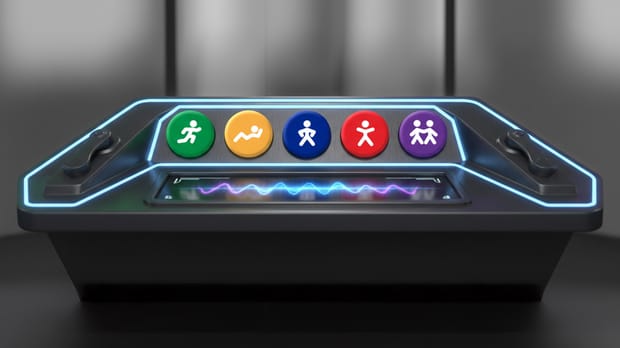
The Inner Control Panel is more than a list of systems. It is a translation layer. It is a User Interface for the human condition.
It changes the conversation from: "What is wrong with you?" To: "Which slider is out of balance?"
Here is how this shared language changes the game for three key groups.
1. For the Operator (You)
The dashboard of the Inner Control Panel Objectifies the Problem.
When you feel terrible, it feels like you are terrible. The shame fuses with the symptom.
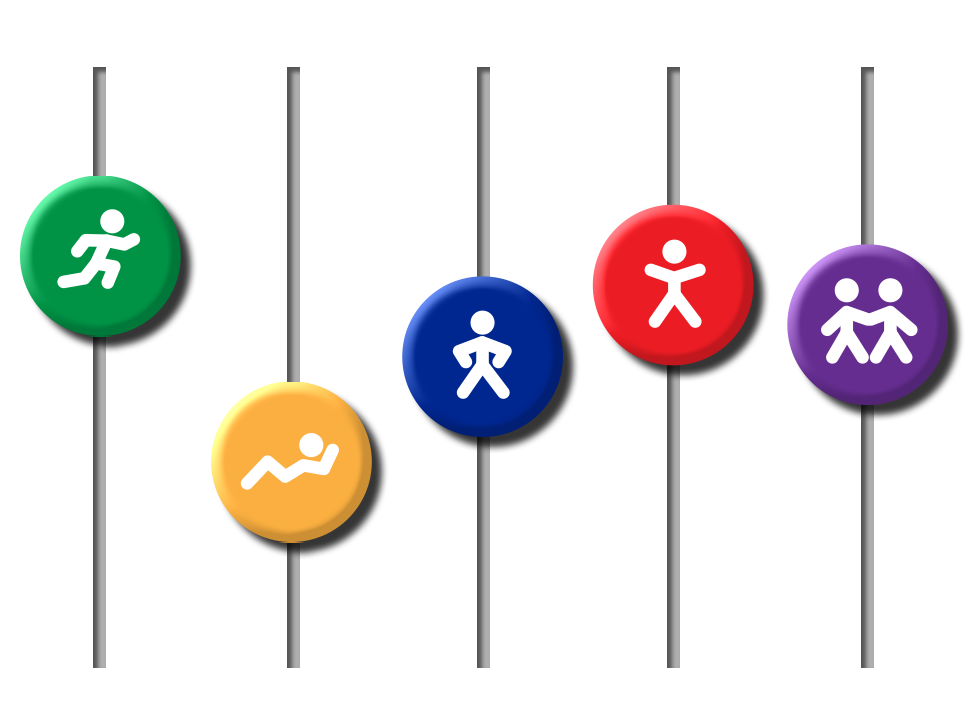
But when you visualize the panel, you create distance. You realize: "I am not a broken person. I am a skilled Operator managing a board where the Energy slider is at 10% and the Status slider is redlining at 100%."
It turns a moral failing into a mechanical issue. Mechanics can be fixed. Moral failings are heavy.
2. For the Professional (The Sound Engineer)
Therapists and coaches often spend weeks just trying to get on the same page as the client.
The dashboard acts as a shortcut. It creates an immediate alliance.
Instead of fighting the client’s resistance, the professional can point to the board:
- "I hear you saying you feel lonely (Connection is low), but look at your Energy slider. It’s at zero. The music can't play if the power is off. Let’s bring that fader up first."
It provides a logic for the intervention. It explains why we are doing the Minimum Effective Dose (MED). It stops the patient from asking for the "magic pill" and starts a conversation about "fixing the mix."
3. For the Caregiver (The Co-Pilot)
Watching someone you love struggle is agonizing because you feel helpless. You don’t know what to do.
The dashboard gives the Co-Pilot a job.
If your partner is spinning out in Status anxiety ("I’m a failure"), you don’t need to offer empty platitudes. You can visualize their board and say: "Okay, the Status fader is blown out. It's causing feedback. Let’s manually bring up the Connection fader to balance it out. Let’s just sit together for 10 minutes."
It turns empathy into utility.
The Mixing Board: An Audio Equalizer for Life
Think of your well-being like an old-school stereo equalizer. You have five vertical sliders, side-by-side.
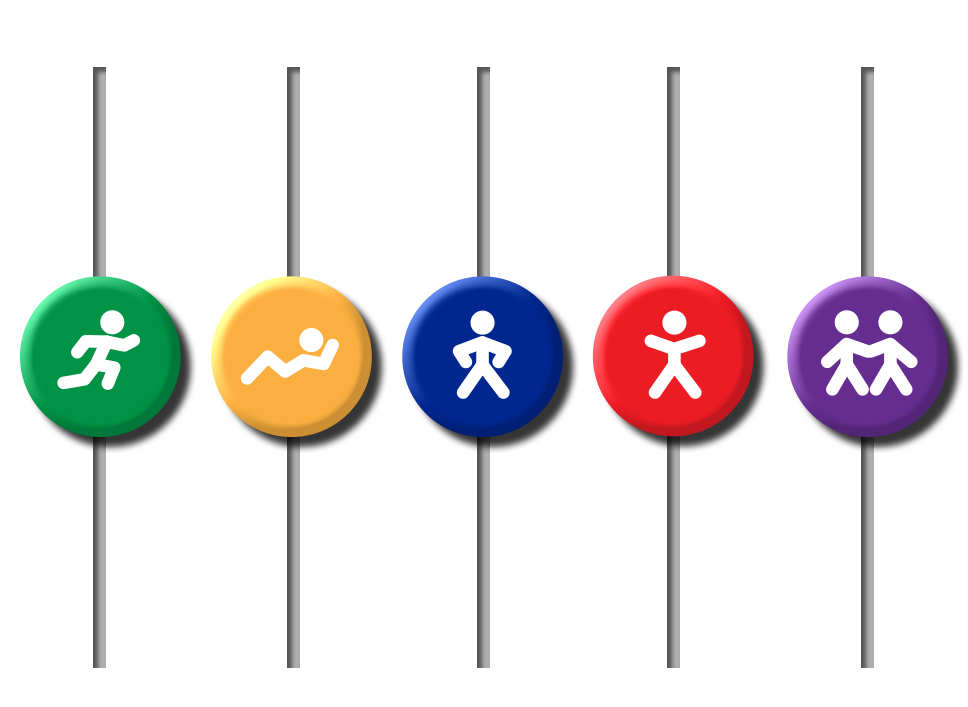
1. Energy | 2. Recovery | 3. Status | 4. Attention | 5. Connection
- The Trap of "Max Volume": We think the goal is to have every slider at 100%, all the time. High energy, high status, extreme focus.
- The Reality: If you crank every fader to the top, you don't get a symphony. You get distortion. You blow the speakers.
The goal is the Mix.
- Sometimes, you need to push the Status slider up (to ask for a raise) and pull the Recovery slider down temporarily. That is okay, as long as you bring it back down later.
- Sometimes, you need to cut the Attention slider (stop working) to boost the Connection slider (be with your kids).
When you see the systems as an Equalizer, you stop trying to be "perfect." You start trying to be balanced.
The Takeaway
We need to stop guessing.
We are trying to mix a complicated track, but we are doing it with earplugs in.
The Inner Control Panel pulls the earplugs out.
It gives us the words to ask for what we need. It gives us the map to find the distortion. And most importantly, it reminds us that we are the ones at the board.
Stop feeling the noise. Start mixing the track.


