
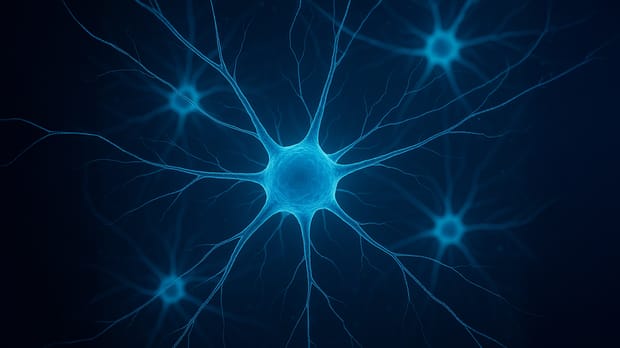
The Recovery System (RS), within the DBM/ICP framework, acts as the brain's internal protective and homeostatic dampening mechanism. Its primary function is to terminate the stress response and prevent the cumulative cellular damage—specifically excitotoxicity and allostatic overload—that arises from chronic or acute overstimulation.

1. Guarding Against Excitotoxicity: The GABA-Glutamate Balance
Overstimulation, particularly under acute or chronic stress, often leads to an imbalance in the ratio of the brain's primary neurotransmitters: Glutamate (excitatory) and GABA (inhibitory). The RS works to restore the dominance of inhibitory control.
- The Threat: Glutamate and Excitotoxicity: Stress mobilizes energy and sensory processing, driven by excitatory neurotransmission. Excessive, prolonged release of Glutamate (the primary excitatory neurotransmitter) can over-activate its receptors, particularly the NMDA receptors. This leads to an unregulated influx of $\text{Ca}^{2+}$ ions into the post-synaptic neuron. Sustained high intracellular $\text{Ca}^{2+}$ triggers a cascade of lethal events, including mitochondrial failure, oxidative stress, and the activation of proteolytic enzymes, culminating in neuronal apoptosis (programmed cell death) or necrosis. The RS's failure is fundamentally a failure to prevent excitotoxicity.
- The Shield: GABAergic Inhibition: The RS relies heavily on the GABA system (Gamma-Aminobutyric Acid), the main inhibitory neurotransmitter, to counterbalance this excitatory drive. GABAergic interneurons release GABA, which binds to $\text{GABA}_\text{A}$ and $\text{GABA}_\text{B}$ receptors, hyperpolarizing the neuron and reducing its likelihood of firing. In key stress-processing regions like the Amygdala and Hippocampus, RS activation promotes enhanced GABA release, effectively reducing the overall neural activity and "gating" the flow of sensory information, thus protecting downstream neurons from overload.
2. Instinctive Behavior: The Drive for Autonomic Down-Regulation
The RS is not purely a chemical process; it is intrinsically linked to behavioral drives that promote safety and rest. This connection forms the basis of therapeutic interventions (the "tuning" process).
- Polyvagal Theory and the Social Engagement System: The Polyvagal Theory (188) describes the myelinated vagus nerve (part of the Parasympathetic Nervous System, PNS) as supporting a Social Engagement System. When the nervous system detects cues of safety (e.g., rhythmic breathing, prosody in voice, a calm face), the PNS is activated. The instinctive behavioral response to danger is fight/flight (Sympathetic Nervous System, SNS); the instinctive response to perceived safety is a drive toward affiliation, quiet, and stillness—the Relaxation Response (93).
- Innate Self-Soothing Behavior: Behaviors like sighing, yawning, repetitive rocking (in infants/trauma survivors), and deep abdominal breathing are not random; they are innate self-regulatory behaviors that evolved to modulate the autonomic nervous system.
- Vagal Pacing: Slow, deep, diaphragmatic breathing instantly stimulates the vagus nerve and is perhaps the most accessible "Operator" control for the RS. This MED-based behavior (98) is an instinctive bodily mechanism that quickly shifts the heart rate variability (HRV) and autonomic balance away from sympathetic arousal, acting as a behavioral firewall against chronic SNS overload. The drive for stillness and comfort is the behavioral output of the RS attempting to reduce the physiological cost of stress.
- Pain and Pleasure Feedback: Activities that promote recovery (e.g., quiet rest, secure physical touch) activate the endogenous opioid system (188), providing a subtle, neurochemically rewarding feedback loop that reinforces the behavior of seeking safe, restorative states. This pleasure signal is the DBM's way of encouraging the necessary behavioral shift toward down-regulation.
3. Receptor Regulation and Desensitization: Adaptive Plasticity
When faced with continuous high levels of circulating neuromodulators (like stress hormones or monoamines), neurons execute adaptive mechanisms to protect themselves, which are central to the RS function.
- Receptor Downregulation: Chronic high stimulation of a neural pathway—e.g., constant dopamine (DA) signaling from relentless productivity or norepinephrine (NE) from hypervigilance—can lead to the cell physically reducing the number or sensitivity of its postsynaptic receptors. This process, known as receptor downregulation (3), is a direct protective measure to prevent neuronal exhaustion and excitotoxicity. In the context of the RS, downregulation is an adaptive response to chronic overload.
- The Role of Cortisol Feedback: The HPA axis, a core part of the RS, releases Cortisol. Cortisol's primary protective action is its negative feedback loop (81). Cortisol binds to Glucocorticoid Receptors (GR) in the Hippocampus and Hypothalamus, which then inhibits the further release of CRH and ACTH, thereby shutting down the stress response. If the RS is healthy, this loop quickly terminates the HPA cascade, preventing prolonged exposure to stress hormones which are themselves neurotoxic at sustained high concentrations.
- Dysregulation Threat: In chronic stress (allostatic load), these GRs become desensitized or downregulated, leading to a failure of the negative feedback loop. The result is sustained high Cortisol, which is highly detrimental to hippocampal neurogenesis and can cause dendritic atrophy, directly impairing the structure and function of the brain's stress-buffering centers (25).
4. Allostatic Load and Cellular Repair
The long-term function of the RS is to manage allostatic load—the "wear and tear" on the brain and body from chronic stress (25).
- Endocannabinoid (eCB) System as Modulator: The eCB system (including $\text{AEA}$ and $\text{2-AG}$ and their $\text{CB}_1$ receptors) acts as a crucial brake on the stress axis (88). It functions as a retrograde messenger, signaling from the postsynaptic neuron back to the presynaptic neuron to temporarily suppress further neurotransmitter release (89). This "on-demand" inhibition is a highly localized protective mechanism, preventing over-firing, particularly in stress and fear circuits involving the amygdala.
- Tuning and Neurogenesis: Tuning the RS (via practices like mindfulness, breathwork, and boundary-setting) aims to lower the baseline sympathetic drive and enhance PNS (Parasympathetic Nervous System) activity. This allows the brain to shift from energy mobilization (stress) to energy conservation and cellular repair. Recovery periods support processes like:
- Neurogenesis: The generation of new neurons, particularly in the Hippocampus, which is essential for emotional regulation and stress resilience.
- Mitochondrial Biogenesis: Creating new, healthy mitochondria, reversing the metabolic exhaustion caused by chronic stress (55).
- Synaptic Pruning and Consolidation: Critical processes that occur mainly during sleep (an EMS/RS overlap), which filters out unnecessary neural connections and consolidates learning, preventing informational overload (46).
The Recovery System is thus the integrated circuit board that protects the physical integrity of the central nervous system by deploying localized chemical brakes (GABA, eCBs) and global hormonal controls (HPA axis feedback), while also driving instinctive behavior toward safe, restorative states.


