Your brain’s built-in survival systems
If you were born 100,000 years ago, you didn’t get an instruction manual for your brain.
What you did get was a set of neurobiological systems shaped by evolution to keep you:
- alive,
- connected to your group, and
- doing the things that help you and your tribe thrive.
These systems are not metaphors or “personality types.”
They are old, automatic circuits that push you toward:
- using energy wisely,
- recovering from stress,
- staying safe in the group,
- staying alert to what matters, and
- staying bonded to other humans.
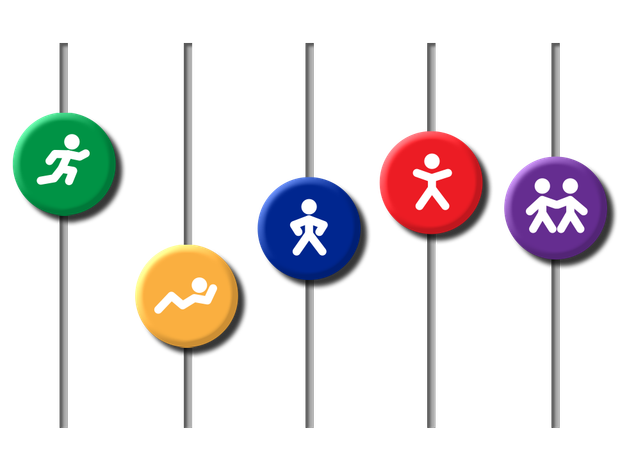
When I talk about the Inner Control Panel, I’m talking about five dials you can actually observe in daily life.

If you’re a therapist, these are key targets.
If you’re a human, this is your operating manual.
Here’s the crew.
1. The Energy Management System
(How your brain decides what’s worth spending energy on)

This is not just “a battery.”
It’s the system that decides where your limited energy goes.
For our ancestors, this meant questions like:
- Do we hunt now or rest?
- Do we fight, run, or stay still?
- Do we use energy to heal, to think, to move, to care for a child?
Today it’s the same logic, different context:
- Do I spend energy on this project, this conversation, this scroll, this workout?
What it does:
It tracks how much biological fuel you have and prioritizes survival-relevant actions: staying safe, finding food, caring for others, learning, and exploring.
Why evolution built it:
If you waste energy on the wrong things, you don’t survive long enough to pass on your genes.
If you use energy wisely, you can work, learn, connect, and play in ways that bring out your best.
When this dial is low, the world doesn’t just feel “tiring.” It feels not worth the effort.
That’s the system saying: “We’re out of fuel for meaningful action.”
2. The Recovery System
(How your brain lets go of the gas pedal)

Stress is useful.
It’s the gas pedal that makes you move fast when there’s a threat or an opportunity.
But evolution also built a brake.
The Recovery System is what lets your body:
- come down after a threat,
- repair tissue,
- digest food,
- integrate memories,
- and reset for the next challenge.
What it does:
It shifts you between:
- Fight / Flight (alert, mobilized, ready) and
- Rest / Repair (calmer, digesting, healing).
Why evolution built it:
A body that is always on high alert breaks down.
A body that can move in and out of stress stays strong for the long game.
When this dial is stuck, you feel “wired but tired”: the engine is revving while the tank is empty.
The system is trying to protect you, but it’s reading “ongoing danger” even when you’re safe.
3. The Status System
(How your brain tracks your place in the group)

For humans, social survival is survival.
For most of our history, being part of a group meant:
- access to food,
- protection from predators,
- help when you were sick or injured,
- chances to find a mate.
Being pushed to the edge of the group — or out of it — could literally mean death.
The Status System is your built-in social survival radar.
It tracks things like:
- Am I contributing?
- Am I respected?
- Do I still have a place here?
- Should I lead, support, or step back?
What it does:
It constantly reads social signals (tone, posture, roles, feedback, comparison) and adjusts your behavior:
- work harder,
- back off,
- seek reassurance,
- look for a new group.
Why evolution built it:
Groups work when people self-organize: some lead, some follow, everyone finds a role.
This system pushes you to add value so the group keeps you around — and you all survive.
In today’s world, the same system is staring at:
- follower counts,
- promotions,
- curated lives on social media.
When the dial is off, it can feel like:
- “I’m never enough,” or
- “I deserve more without giving more.”
Underneath both is the same ancient question:
“Is my place in the tribe secure?”
4. The Attention System
(How your brain stays focused and alert to what matters)

Your brain can’t process everything.
It has to choose.
The Attention System controls:
- what you focus on, and
- how alert you are to signals of threat and opportunity.
For our ancestors, this meant:
- hearing a branch snap in the dark,
- spotting food in the distance,
- noticing small changes in people’s faces,
- staying locked on a task like tracking or tool-making.
What it does:
It aims your mental spotlight and sets your level of alertness:
- zoom in on this conversation,
- scan the environment for danger,
- ignore this noise,
- respond to that movement.
Why evolution built it:
If you can’t focus, you miss the important thing.
If you can’t stay alert when it matters, you miss the snake, the cliff, the conflict, the chance.
In a world of notifications and endless input, this system is overloaded.
When the dial is off, it feels like:
- foggy thinking,
- starting but not finishing,
- physically present but mentally elsewhere.
It’s not just a “filter problem.” It’s your focus + alertness system working overtime in a world it wasn’t designed for.
5. The Connection System
(How your brain drives bonding and proximity)

Humans are built to live in groups, not as isolated units.
The Connection System is your drive to:
- move closer to people who feel safe,
- build bonds over time,
- stay physically and emotionally near your “people”.
Think of it as your bonding and proximity system.
For our ancestors, this looked like:
- huddling together for warmth,
- caring for children together,
- sharing food,
- keeping watch for each other at night.
What it does:
It pushes you toward:
- eye contact, touch, shared routines,
- shared stories and trust,
- and physical or emotional closeness with your group.
Why evolution built it:
Alone, you’re vulnerable.
Connected, you’re part of a living network of support, protection, and meaning.
When the dial is low, it feels like:
- loneliness,
- emotional coldness,
- being near people but not feeling with them.
The system isn’t judging you. It’s sending a signal:
“We can’t do this life thing entirely on our own. Get closer.”
The Cascade
(Why one blinking dial becomes a dashboard of alarms)
These systems don’t live in separate rooms.
They talk to each other.
- If Energy is low,
your Attention dial struggles → you can’t think clearly or finish things. - When attention fails,
your Status dial fires → “I’m falling behind; I’m not good enough.” - When Status hurts,
your Connection dial pulls back → you isolate or feel ashamed. - When you’re isolated,
your Recovery dial may never get a full reset → your body stays tense and overworked.
One small imbalance can light up the whole board.
The Work
(How to use the panel instead of fighting it)
The goal is not to fix everything at once.
The question is:
Which dial is the Domino?
If I adjust this one a little, which other dials will improve naturally?
Examples:
- Maybe you don’t need to reinvent your career (Status) yet.
You might need to protect your sleep and nutrition (Energy) so you can actually show up as yourself. - Maybe your relationship doesn’t need a grand intervention (Connection) until your nervous system isn’t stuck in high alert (Recovery).
- Maybe you’re not “lazy” (Status story).
Your Attention system is fried from constant inputs and needs fewer tabs open — in your laptop and in your life.
You were born with these systems.
They are not against you.
They evolved to get the best out of you: more aliveness, more competence, more connection, more chances to survive and build a good life.
You don’t need to be perfect at all five.
Pick one dial.
Tune it slightly.
Watch what happens to the rest of the panel.
When you understand these five systems, you suddenly have a map for a huge portion of human behavior. Your own patterns start to make more sense: the days you can’t get going, the nights you can’t shut down, the sting of comparison, the scattered focus, the ache of loneliness. But it doesn’t stop there. You also begin to see other people differently—not as “difficult” or “lazy” or “needy,” but as nervous systems trying to manage Energy, Recovery, Status, Attention, and Connection with the tools they have. Conflict, burnout, shame, even some forms of “motivation problems” become easier to read once you can see which dial is driving the behavior.


